Thursday, 19 September 2013

Advice on screenwriting - Lowell Ganz & Babaloo Mandel

Lowell Ganz and Babaloo Mandel have been writing television and film scripts for decades. Starting with Happy Days, they followed actor-turned-director Ron Howard into feature films like Night Shift, Splash, Gung Ho, Parenthood, and Edtv.

In total, Ganz and Mandel have written eighteen, yeah eighteen, produced feature screenplays, including City Slickers, A League of Their Own, Mr. Saturday Night, Forget Paris, Where the Heart Is, Robots, and Fever Pitch, while also maintaining a "secret career" of un-credited rewrites on studio comedies. Oh, and they never wrote a spec script.
Have a listen to these guys as they reminisce...


Wednesday, 18 September 2013

Free screenwriting software - updated

We talked about free screenwriting software back in February 2013, and mentioned products such as CELTX, Rough Draft, Free Film Project, Page 2 Stage, Plotbot, and Trelby. Now there's another one, called WriterDuet.

It was created by Guy Goldstein, a software engineer based in Austin, Texas, who wants to be a screenwriter. He also wants to collaborate online, in real time, with other screenwriters. No existing screenwriting software would allow him to do all the things he wanted to do. So he wrote his own.

And gave it away for free. Here.

I've played with it and, apart from having to look in different places for familiar controls, it seems to work just fine. The other plus is that the guy writing the program is accessible and responsive. Contact him: guy@readthrough.com

 
WriterDuet. Give it a try.

Tuesday, 17 September 2013

Interview with Paul Zeidman

Paul Zeidman is a screenwriter, radio reporter, blogger and a maker of baked goods. He lives in San Francisco. His fantasy-adventure script Dreamship was in the top 15% of all entries in the 2013 Academy Nicholl Fellowships in Screenwriting.
     Paul is one of the people who make the international screenwriting community so warm and accepting. He was among the first to include me. 

    Thank you, Paul.
________________________________________________________________________

Where were you born, and where did you grow up?

I was born and raised in the suburban metropolis of Cherry Hill, New Jersey, a bedroom community of Philadelphia.

What kind of a family did you grow up with?

I’m the youngest of five, so I was always considered “the baby”. I suspect my parents were used to dealing with the varying personalities of their other four children, so they were very tolerant of my interests (comic books, sci-fi, etc). I wouldn’t say we were a close family, but we got along.

Where did you go to school?

After surviving the public school system, I attended the University of Pittsburgh as an English Writing major. I love to write, and relished the idea of going to school in a big city. (Another of my criteria was to not go to the same school as any of my siblings. I’ve always embraced individuality.)

When did you first take an interest in films/stories?

I’ve been crazy about both as long as I can remember. In terms of stories, my parents tell me I taught myself to read when I was three, and I’ve never stopped. Despite now living in the digital age, I think losing yourself in a book is still pretty cool.
     As I mentioned, I’m a longtime fan of comic books. It’s a great medium for telling stories. I enjoy a good superhero comic as much as the next person, but there’s something to be said about ones that are more slice-of-life. That being said, I’m also extremely impressed with the assortment of webcomics that are out there.

    But films have always been something I’ve absolutely loved. When you see something you really enjoy, it’s an almost magical sensation. It doesn’t matter if it’s a work of genius or a piece of crap, the important thing is you were entertained. Which

is what it all comes down to—telling a story that entertains.
    I’m very fortunate to have married somebody who enjoys movies just as much, and we’ve made a point of trying to slowly introduce our daughter to all kinds of genres. She loves Buster Keaton and Harold Lloyd just as much as The Avengers (2012) or Despicable Me 2 (2013).


What was your first paying job (in any field)?

Technically, my first paying job was mowing lawns for my mom. She was in real estate, and yours truly had to go to her different properties to cut the grass. My first non-family-related job was working at a Wendy’s.

How did you get to work in radio?

My senior year in college, I got an internship at an Oldies station with their promotions department (since I had aspirations of becoming a copywriter). It was okay, but a lot of what I had to do involved working with the on-air staff, and I developed a good rapport with a lot of them. When the internship was over, the program director asked if I’d be interested in being a board-op (board operator) for the weekend overnight shifts. A board-op plays the music and commercials, but no talking.
     At the end of the summer, my girlfriend (now wife) and I moved to San Francisco. I got another internship with an ad agency, but realized I’d enjoyed the radio aspect more than the advertising, and was able to get another board-op job. Over the years, I’ve worn a lot of hats, including producer, DJ, and most recently, traffic reporter. 


The ever-vigilant traffic reporter in his natural habitat...

Given that “The coldest winter I ever spent was a summer in San Francisco,” what prompted you to relocate there?

My girlfriend and I knew we wanted to be in a big city after college, and there were certain criteria we each had. San Francisco met a lot of those, and there have been no regrets whatsoever. It’s wonderful here, and I can’t imagine living anywhere else.
    A lot of people ask me “If you want to be a screenwriter, why don’t you live in Los Angeles?” A great thing about writing is you can do it anywhere, and if I’m fortunate enough to establish a career as a screenwriter, it’s not a big deal for me to hop on a plane and fly down there.
     I don’t have anything against LA, but I like it here more. 


Tell us a little about your baked goods business.

Ha! I wouldn’t call it a business. I just really like to work in the kitchen. There’s a certain coolness factor to serving up something you made yourself; even more so when people like it. I especially like to bake (pies, cookies, etc), and have gained quite a reputation for it. Pecan pie is one of my absolute favorites, and I make it whenever I can.

What was your first spec script about?

My first script was a mystery-comedy set during the
Golden Age of Television called The Crimson Cloak. Looking back now, the amateurishness is glaringly obvious. Amazingly, it was a top 10 percent finisher in the Nicholl that year—although I have no idea how. I guess the readers liked the material enough to overlook the flaws.

Who was the screenwriting teacher who had the biggest influence on you?

I didn’t take any screenwriting classes in school, but attended a lot of seminars and conferences. I’m mostly self-taught. I don’t know if anyone’s had a huge influence on me, but I’ve picked up a lot of great tips over the years.
     One of the best pieces of advice I’ve ever heard, and one I always give to other writers, is from Richard Walter at UCLA: “Write as if ink costs a thousand dollars an ounce.” I think that sums it up perfectly.


What are three things you wish someone had told you about screenwriting when you were starting out?

1. Things always take longer than expected. Be patient.

2. Even when you think you’re done, you’re most likely not. Get feedback from people whose opinion you value and embrace the rewrite.

3. Every writer fears rejection and failure as much as you. The only way to conquer it is to keep trying and keep trying to get better.


If you had to suggest just one screenwriting book to a newbie writer back in Adelaide, which one would it be?

I don’t know if it’s still in print, but I highly recommend Story Sense by Paul Lucey. It really lays everything out in a clear, easy-to-understand way. 


What are your ten favourite movies of all time?

Back to the Future (1985)
Some Like It Hot (1959)
Young Frankenstein (1974)
Citizen Kane (1941)
Raiders of the Lost Ark (1981)
Star Wars (1977)
Singin' in the Rain (1952)
The Magnificent Seven (1960)
To Kill a Mockingbird (1962)
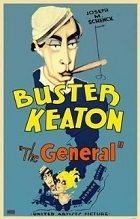
The General (1926)

What’s next for Paul Zeidman?

I was fortunate enough to get a manager earlier this year, so hopefully that puts me one step closer to my ultimate goal: to be a working screenwriter.
    Until then, I’m keeping busy with writing scripts and my blog, and trying to get a podcast going.


When I was a kid in high school, this Scott MacKenzie song played on the radio all the time.
Now when I hear it, it reminds me of Paul.

________________________________________________________________________ Blog    Facebook    IMDb    LinkedIn    Twitter    Website

Monday, 16 September 2013

"Giving"

Yes, it's a commercial, and, yes, it's made in Thailand, but this short film will touch your heart.


Sunday, 15 September 2013

Five tips for cleaning up your script

Julie Gray lives and works in Tel Aviv. She is a screenwriter, story consultant, writer's coach, director of a Screenwriting Competition and publisher of the Just Effing Entertain Me blog.

Julie has taught at the Oxford Student Union at Oxford University, The West England University in Bristol, Wilmington University in Delaware and San Francisco University in Quito, Ecuador. She also teaches writing classes at Warner Bros., The Great American Pitchfest, The Creative Screenwriting Expo and the Willamette Writer's Conference in Portland, Oregon.

She is a volunteer at the Afghan Women's Writing Project, she blogs for the Times of Israel, and is working on a memoir.

I'm hoping to set up an interview with Julie down the track. Meantime, here's a simple but valuable piece of advice she posted on her blog recently.

________________________________________________________________________

Five Tips for Clean Pages

You know that feeling you get when you receive an email from someone – someone you love and care about, and yet the email is one long, dense block of type? And your shoulders slump a little? Why can’t they just use paragraph breaks? This is going to be a slog.

Script pages that are cluttered and have “too much black” give readers the same feeling. And they frequently get put at the bottom of the pile if not rejected entirely. Which is a crying shame because your story might be GREAT. But your pages are off-putting. Listen, if I’ve said it once, I’ve said it a thousand times, real human beings read your scripts. They might have read three other scripts that DAY alone. So you want to make your pages very clean and easy to read.

Here are five ways to clean up those pages.

1. Avoid Camera Directions

Do not use camera directions of any kind. No “tracking shot”, no “angle on”, no “smash cut”. These instructions do not belong in your spec script and definitely muck up your pages. Don’t do it.

2. Limit The Number of Consecutive Action Lines

Try not to write more than five lines of action in one block. If you have more action because you are writing an action scene, simply use a paragraph break. Break up those big blocks of action lines.

3. Avoid Lengthy Dialogue

Avoid dialogue that is more of a monologue and is longer than ten lines. Monologues that take up half a page or even a whole page instantly put a reader off their feed.

4. Keep Sluglines Simple

Simplify your slug lines. Do you need:

INT. MOTEL ROOM - DAYTONA - SPRING BREAK – DAY ?

No. Many writers include in sluglines what should actually be in the action lines below it. Long detailed sluglines are very off putting.

5. Learn About and Use Mini-Sluglines

Use mini-slug lines. If you are in the same location (one house, many rooms, as one example) instead of slugging every mini-location within your location, you can use a mini-slug which looks like this KITCHEN, or OUTSIDE ON THE DECK. 

Taken from Michael Clayton (2007), by Tony Gilroy

Go through your pages today and look for EVERY opportunity for there to be more white on your page and less black. It’s okay if you have a long sequence or two – but it’s all in how you present it. Simplicity and brevity are your very best pals in screenwriting.

________________________________________________________________________

Saturday, 14 September 2013

Tarantino's influences

If you've read the original script for Reservoir Dogs, you will remember that the second page held a list of eight names. In the following video, Quentin Tarantino talks about who those people are and how they influenced him.

This clip is ten minutes long and well worth your time.


Some good news...

These days it is mostly doom and gloom, but I heard this morning that my old friend, Ed Love, just sold his first screenplay. Not for a lot of money, but enough to feel appreciated. Mazel tov, Ed!