Showing posts with label Allison Burnett. Show all posts

Wednesday, 4 January 2017

Interview with Allison Burnett

Allison Burnett is an L.A.-based novelist and screenwriter. He is a prolific writer of novels and screenplays, most of which have become Hollywood movies involving people such as Richard Gere, Winona Ryder, Joan Chen, Heather Graham, Josh Hartnett, Diane Lane, Samuel L. Jackson, Lara Flynn Boyle, Morgan Freeman, Radha Mitchell, Kelsey Grammer, Kate Beckinsale, and Anthony LaPaglia, among many others.

He is currently in the midst of directing the film Undiscovered Gyrl. I took the opportunity of an enforced break to ask him some questions.


•  Where were you born, and where did you grow up?

I was born in Ithaca, New York, when my father was getting his PhD in Marine Biology at Cornell University. We moved around a lot as he advanced in his career. I spent most of my childhood in Cleveland Heights, Ohio, and Evanston, Illinois.

•  What kind of a family did you grow up with?

My father was a brilliant, disturbed alcoholic scientist and creative writer. My mother is a psychotherapist, with all the good and bad that that implies. I have one brother and one sister. I would describe our home life as loud, brainy, and intensely dysfunctional.

•  Where did you go to school?

A large public high school in Evanston, Illinois, and then I stayed at home and attended Northwestern University, where my father taught. I majored in the Oral Interpretation of Literature. I acted in plays and wrote them as well. Later, I did a one-year fellowship in playwriting at the Juilliard School.

•  When did you first decide you wanted to write?

I was always writing throughout high school and college, but I did not commit it to as a profession until a few months out of college. I was twenty, living in New York, and performing in a small production of a George Bernard Shaw one-act play. Often there were just a few people in the audience. I thought, "This is a dog's life. I'm going to commit to playwriting." Writing had always come easier to me than acting. 


•  Who has had the most influence on you as a writer

Nathanael West, Anton Chekhov, F. Scott Fitzgerald, and Charles Dickens.

•  Starting with the first film you wrote and directed, Red Meat (1997), you have developed a reputation as a creator of positive roles for women. How do you view a film such as Thelma and Louise?

Thelma and Louise (1991) opened right around the time that Silence of the Lambs (1991) came out. Everyone was hailing the former as a seminal feminist statement and condemning the latter as a movie that showed a woman being victimized. I thought it was just the opposite. In my eyes, Thelma and Louise are cowards running from the law and accountability. In fact, they would rather die than defend their actions in court. People kept comparing them to Butch Cassidy and The Sundance Kid, which I thought was silly. Those guys went out fighting, guns blazing, against insurmountable odds. They knew if they were captured, they were dead anyway. They didn't jump off a cliff to certain death just to avoid a self-defense plea. 
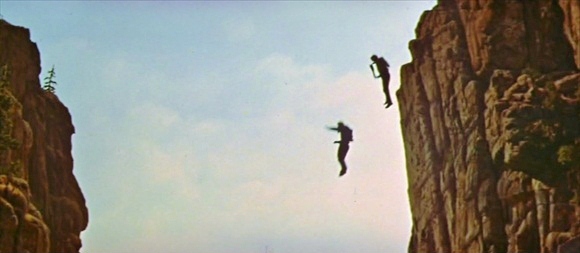

Butch Cassidy and the Sundance Kid jump off a cliff to escape the Superposse
Silence of the Lambs, on the other hand, was about a courageous female federal agent who bravely risks her life to save a woman in peril. If I had a daughter, I would rather she emulate Clarice Starling than either Thelma or Louise, both of whom strike me as terribly immature, almost stunted, both emotionally and intellectually.

•  We’ve talked about your experiences with Autumn in New York. What did you find most frustrating about seeing your screenplay mangled like that?

Somehow my script managed to stay pretty much intact until less than a week before shooting, when Richard Gere ordered a rewrite. I think everyone involved with the film, including Richard himself, now acknowledges that this was a mistake. The experience, although painful, was a gift, because it reminded me that I would never be able to experience the pride of authorship if all I did was write movies. It led me back to fiction. I have published four novels, with a fifth coming out next year. 


•  You’ve just finished the directing one of your novels, Undiscovered Gyrl, into a film. How did that go? Did you bring any lessons back from the shoot?

My movie shares its lead actress, the brilliant and beautiful Britt Robertson, with a Vince Vaughn movie that was hit by Hurricane Sandy. The disruption of their schedule disrupted ours. When Undiscovered Gyrl finishes shooting in mid- January, we will have shot in four different months! 

   What did I learn? Never give up!

•  What was the best advice you were given at the start of your career?

If you want to stay sane as a screenwriter, make sure you have some other creative outlet. 


What are three things you wish someone had told you about writing when you were starting out

1. The worlds of indie script writing and studio screenwriting are entirely different. 
2. Don't use your writing as therapy. Write about your personal dramas only after they are over. 
3. Write every single day. Soon you will be addicted. It won't take discipline. It will be a compulsion. 

•  What one filmmaking advice book would you recommend to a young wannabe screenwriter in Adelaide

Even though it is thirty years old, Adventures in the Screen Trade, by William Goldman
   And here is the advice I would give that young writer: 
   Read great literature, watch great movies, lead a brave, rich life, and eventually move to Los Angeles. 

What are your ten favorite movies of all time

The list of 10 films I think are the greatest bear no resemblance to my favorites, i.e., these are the ones I enjoy the most:
Harold and Maude (1971)
The Best Years of Our Lives (1946)
Annie Hall (1977)
Carnal Knowledge (1971)
Chinatown (1974)
Shane (1953)
Election (1999)
Shadow of a Doubt (1943)
The Shop Around the Corner (1940)
Holiday Affair (1949)


Here's the preview for Gone, the most recent of Allison Burnett's screenplays to be released as a movie.


First posted: 3 January 2013

Wednesday, 17 August 2016

Video Review: 'Screenplays That Sell'

Allison Burnett is an L.A.-based novelist and screenwriter. He has written numerous Hollywood movies, involving people such as Richard Gere, Winona Ryder, Joan Chen, Heather Graham, Josh Hartnett, Diane Lane, Samuel L. Jackson, Lara Flynn Boyle, Morgan Freeman, Radha Mitchell, Kelsey Grammer, Kate Beckinsale, and former Adelaide boy Anthony LaPaglia, among many others.

I first noticed his name when I watched the romantic drama Autumn in New York on DVD, while undergoing chemotherapy back in 2007. When I heard he had released a video detailing the secrets of his amazing success, I wanted to see it.

Here's the point: Allison Burnett has written a dozen movies, including a run of seven consecutive spec scripts, every one of which sold to Hollywood. Well over 99% of all spec scripts written never sell. The odds of being in that less-than-one-per-cent that do sell, seven consecutive times, are beyond my memories of the Probability Theorem, but they would be astronomical. There has to be something more than luck at work here.

His background is that he was a theater-geek in high school, who then spent ten years writing plays, short stories and novels
in New York, while working as a high school tutor and proof-reading at a law firm. At the end of that first ten years he had earned just $100 from his writing.

He moved to L.A. in 1990 to write screenplays.

The first significant fact he tells us, in his video Screenplays That Sell, is that he didn't approach screenwriting while thinking romantically of himself as an artist; he was comparing screenwriting with proof-reading legal documents and tutoring high school kids. It was to be a business, a way of earning a living.

Soon after, he went bankrupt. Desperation brought a sharper focus. He was writing spec scripts that producers agreed were well-written, but that they refused to buy. Allison began to observe the patterns of his failures-to-sell.

In the struggle between you and the world, back the world. —Kafka
Allison Burnett and Alan Watt (LA Writers' Lab)
From there he recounts the process by which he learned the rules of How To Sell a Screenplay in Hollywood. It's a great story, well told.

Here are just a few of the pointers from the video.

  • Producers will not buy your script, if they cannot sell your script.
  • Even when a studio can make a movie for $5million, they still have to spend $35million around the world to market that film.
  • You have to write for movie stars.
  • There's no green light in the studio world without a movie star saying 'Yes.'
  • You want your lead actor to have speeches, you want them to have an Oscar clip, you want them to have big emotions, you want them to have set pieces where they can really act.
  • What's 'in' and what's 'out' changes over time, but the genre in which you choose to write is absolutely crucial. 
  • It's becoming harder to sell romantic comedy. 
  • Beware of writing anything about grownups. 
  • Spec scripts need to have a youth element.
  • Do not offend.
  • A lot of writers try to get approval and love way too early. Get the script right first.


This is a 90 minute video in which a successful spec script writer explains the things which moved him from consistent failure to consistent success. It is solid with information. I couldn't get through the entire video in a single sitting; there's too much to think about. Allison Burnett is easy to listen to: nice voice, clear diction, well organised.

The thing is, it's going to cost you US$10, give or take, depending on exchange rates, etc., to get hold of the video. I wondered why he didn't go the traditional route and turn it into a book, but that's becoming a crowded field. And there's the other question, of whether people learn better via their eyes or their ears. I do better if I can see the material written down, which is partly why I take notes. For some people, having someone tell you the information is more effective.

I recommend this video to anyone aiming to crack the Hollywood spec script market.

If it were a book, I'd say it was a steal at $10. The information is 2012 current. I was surprised by some of the things he shared on what genres are currently selling, what to avoid, how movie stars think, the difference between a star and a character actor, his theory of pitching, and (my favorite) how a writer can plunder a studio meeting.   I especially enjoyed the sense he gives of how things really unfold when writers negotiate with producers/agents/studios.

Screenplays That Sell is worthy of your time and money. Here's a short clip so you can see for yourself.


First posted:29 October 2012

Thursday, 3 January 2013

Interview with Allison Burnett

Allison Burnett is an L.A.-based novelist and screenwriter. He is a prolific writer of novels and screenplays, most of which have become Hollywood movies involving people such as Richard Gere, Winona Ryder, Joan Chen, Heather Graham, Josh Hartnett, Diane Lane, Samuel L. Jackson, Lara Flynn Boyle, Morgan Freeman, Radha Mitchell, Kelsey Grammer, Kate Beckinsale, and Anthony LaPaglia, among many others.

He is currently in the midst of directing the film Undiscovered Gyrl. I took the opportunity of an enforced break to ask him some questions.
________________________________________________________________________

•  Where were you born, and where did you grow up?

I was born in Ithaca, New York, when my father was getting his PhD in Marine Biology at Cornell University. We moved around a lot as he advanced in his career. I spent most of my childhood in Cleveland Heights, Ohio, and Evanston, Illinois.

•  What kind of a family did you grow up with?

My father was a brilliant, disturbed alcoholic scientist and creative writer. My mother is a psychotherapist, with all the good and bad that that implies. I have one brother and one sister. I would describe our home life as loud, brainy, and intensely dysfunctional.

•  Where did you go to school?

A large public high school in Evanston, Illinois, and then I stayed at home and attended Northwestern University, where my father taught. I majored in the Oral Interpretation of Literature. I acted in plays and wrote them as well. Later, I did a one-year fellowship in playwriting at the Juilliard School.

•  When did you first decide you wanted to write?

I was always writing throughout high school and college, but I did not commit it to as a profession until a few months out of college. I was twenty, living in New York, and performing in a small production of a George Bernard Shaw one-act play. Often there were just a few people in the audience. I thought, "This is a dog's life. I'm going to commit to playwriting." Writing had always come easier to me than acting. 


•  Who has had the most influence on you as a writer

Nathanael West, Anton Chekhov, F. Scott Fitzgerald, and Charles Dickens.

•  Starting with the first film you wrote and directed, Red Meat (1997), you have developed a reputation as a creator of positive roles for women. How do you view a film such as Thelma and Louise?

Thelma and Louise (1991) opened right around the time that Silence of the Lambs (1991) came out. Everyone was hailing the former as a seminal feminist statement and condemning the latter as a movie that showed a woman being victimized. I thought it was just the opposite. In my eyes, Thelma and Louise are cowards running from the law and accountability. In fact, they would rather die than defend their actions in court. People kept comparing them to Butch Cassidy and The Sundance Kid, which I thought was silly. Those guys went out fighting, guns blazing, against insurmountable odds. They knew if they were captured, they were dead anyway. They didn't jump off a cliff to certain death just to avoid a self-defense plea. 


Butch Cassidy and the Sundance Kid jump off a cliff to escape the Superposse
Silence of the Lambs, on the other hand, was about a courageous female federal agent who bravely risks her life to save a woman in peril. If I had a daughter, I would rather she emulate Clarice Starling than either Thelma or Louise, both of whom strike me as terribly immature, almost stunted, both emotionally and intellectually.

•  We’ve talked about your experiences with Autumn in New York. What did you find most frustrating about seeing your screenplay mangled like that?

Somehow my script managed to stay pretty much intact until less than a week before shooting, when Richard Gere ordered a rewrite. I think everyone involved with the film, including Richard himself, now acknowledges that this was a mistake. The experience, although painful, was a gift, because it reminded me that I would never be able to experience the pride of authorship if all I did was write movies. It led me back to fiction. I have published four novels, with a fifth coming out next year. 


•  You’ve just finished the directing one of your novels, Undiscovered Gyrl, into a film. How did that go? Did you bring any lessons back from the shoot?

My movie shares its lead actress, the brilliant and beautiful Britt Robertson, with a Vince Vaughn movie that was hit by Hurricane Sandy. The disruption of their schedule disrupted ours. When Undiscovered Gyrl is finishes shooting in mid- January, we will have shot in four different months! 

   What did I learn? Never give up!

•  What was the best advice you were given at the start of your career?

If you want to stay sane as a screenwriter, make sure you have some other creative outlet. 


What are three things you wish someone had told you about writing when you were starting out

1. The worlds of indie script writing and studio screenwriting are entirely different. 
2. Don't use your writing as therapy. Write about your personal dramas only after they are over. 
3. Write every single day. Soon you will be addicted. It won't take discipline. It will be a compulsion. 

•  What one filmmaking advice book would you recommend to a young wannabe screenwriter in Adelaide

Even though it is thirty years old, Adventures in the Screen Trade, by William Goldman
   And here is the advice I would give that young writer: 
   Read great literature, watch great movies, lead a brave, rich life, and eventually move to Los Angeles. 

What are your ten favorite movies of all time

The list of 10 films I think are the greatest bear no resemblance to my favorites, i.e., these are the ones I enjoy the most:
Harold and Maude (1971)
The Best Years of Our Lives (1946)
Annie Hall (1977)
Carnal Knowledge (1971)
Chinatown (1974)
Shane (1953)
Election (1999)
Shadow of a Doubt (1943)
The Shop Around the Corner (1940)
Holiday Affair (1949)
________________________________________________________________________

Here's the trailer for Gone, the most recent of Allison Burnett's screenplays to be released as a movie.


Monday, 29 October 2012

Video Review: 'Screenplays That Sell'

Allison Burnett is an L.A.-based novelist and screenwriter. He has written numerous Hollywood movies, involving people such as Richard Gere, Winona Ryder, Joan Chen, Heather Graham, Josh Hartnett, Diane Lane, Samuel L. Jackson, Lara Flynn Boyle, Morgan Freeman, Radha Mitchell, Kelsey Grammer, Kate Beckinsale, and former Adelaide boy Anthony LaPaglia, among many others.

I first noticed his name when I watched the romantic drama Autumn in New York on DVD, while undergoing chemotherapy back in 2007. When I heard he had released a video detailing the secrets of his amazing success, I wanted to see it.

Here's the point: Allison Burnett has written a dozen movies, including a run of seven consecutive spec scripts, every one of which sold to Hollywood. Well over 99% of all spec scripts written never sell. The odds of being in that less-than-one-per-cent that do sell, seven consecutive times, are beyond my memories of the Probability Theorem, but they would be astronomical. There has to be something more than luck at work here.

His background is that he was a theater-geek in high school, who then spent ten years writing plays, short stories and novels
in New York, while working as a high school tutor and proof-reading at a law firm. At the end of that first ten years he had earned just $100 from his writing.

He moved to L.A. in 1990 to write screenplays.

The first significant fact he tells us, in his video Screenplays That Sell, is that he didn't approach screenwriting while thinking romantically of himself as an artist; he was comparing screenwriting with proof-reading legal documents and tutoring high school kids. It was to be a business, a way of earning a living.

Soon after, he went bankrupt. Desperation brought a sharper focus. He was writing spec scripts that producers agreed were well-written, but that they refused to buy. Allison began to observe the patterns of his failures-to-sell.

In the struggle between you and the world, back the world. —Kafka
Allison Burnett and Alan Watt (LA Writers' Lab)
From there he recounts the process by which he learned the rules of How To Sell a Screenplay in Hollywood. It's a great story, well told.

Here are just a few of the pointers from the video.

  • Producers will not buy your script, if they cannot sell your script.
  • Even when a studio can make a movie for $5million, they still have to spend $35million around the world to market that film.
  • You have to write for movie stars.
  • There's no green light in the studio world without a movie star saying 'Yes.'
  • You want your lead actor to have speeches, you want them to have an Oscar clip, you want them to have big emotions, you want them to have set pieces where they can really act.
  • What's 'in' and what's 'out' changes over time, but the genre in which you choose to write is absolutely crucial. 
  • It's becoming harder to sell romantic comedy. 
  • Beware of writing anything about grownups. 
  • Spec scripts need to have a youth element.
  • Do not offend.
  • A lot of writers try to get approval and love way too early. Get the script right first.


This is a 90 minute video in which a successful spec script writer explains the things which moved him from consistent failure to consistent success. It is solid with information. I couldn't get through the entire video in a single sitting; there's too much to think about. Allison Burnett is easy to listen to: nice voice, clear diction, well organised.

The thing is, it's going to cost you US$10, give or take, depending on exchange rates, etc., to get hold of the video. I wondered why he didn't go the traditional route and turn it into a book, but that's becoming a crowded field. And there's the other question, of whether people learn better via their eyes or their ears. I do better if I can see the material written down, which is partly why I take notes. For some people, having someone tell you the information is more effective.

I recommend this video to anyone aiming to crack the Hollywood spec script market.

If it were a book, I'd say it was a steal at $10. The information is 2012 current. I was surprised by some of the things he shared on what genres are currently selling, what to avoid, how movie stars think, the difference between a star and a character actor, his theory of pitching, and (my favorite) how a writer can plunder a studio meeting.   I especially enjoyed the sense he gives of how things really unfold when writers negotiate with producers/agents/studios.

Screenplays That Sell is worthy of your time and money. Here's a short clip so you can see for yourself.