Roger Deakins has been at the helm of many of the most beautiful films of the past twenty years, including Skyfall (2012), True Grit (2010), A Serious Man (2009), Revolutionary Road (2008), The Reader (2008), No Country for Old Men (2007), The Ladykillers (2004), Intolerable Cruelty (2003), A Beautiful Mind (2001), The Man Who Wasn't There (2001), O Brother, Where Art Thou? (2000), The Big Lebowski (1998), Courage Under Fire (1996), Fargo (1996), Dead Man Walking (1995), The Shawshank Redemption (1994), The Hudsucker Proxy (1994), Barton Fink (1991), Air America (1990), and Stormy Monday (1988).
This tribute video from Plot Point Productions puts his career into some perspective. Relax and enjoy.

Adelaide Screenwriter : Screenwriting, Movies, Tuckshop & Charm School.
Wednesday, 16 July 2014


Tuesday, 15 July 2014
Top 10 Most Effective Editing Moments of All Time
CineFix put this collection together, based on a list published by IndieWire.
Skilled editing is as effective in the creation of a good film as a writer, director, or performer. Though often overlooked, editing brings shots together to make a whole greater than the sum of its parts. These ten movies are a fantastic illustration of just how important editing can be.
Monday, 14 July 2014
Transformers: The PreMake
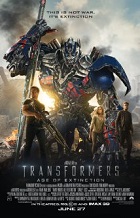
Kevin B. Lee just produced an excellent example of the new form of filmmaking, called Desktop Documentary, which gathers together the bits and pieces which have accumulated on the internet since filming began.
Just have a look at this and you'll get the idea.
Sunday, 13 July 2014
The Mother of All Action Heroines: Rose Sayer
Although The African Queen (1951) is a far cry from what we think of as action
adventure these days, at its center is a female action hero we could all
take a few lessons from.
The creator of this short video, Jennine Lanouette, is in the process of creating a series of e-books to examine other movies in this way.
The creator of this short video, Jennine Lanouette, is in the process of creating a series of e-books to examine other movies in this way.
Saturday, 12 July 2014
History of Wooing Men
It all went downhill after 1996. Or uphill... depending on how you look at it. Featuring Dylan C. Moore.
Friday, 11 July 2014
The Wes Anderson Collection, chapter 3

 ,
that deconstructs each one of Anderson’s films, from the cinematography
to the set design. It is essentially a “book-long interview” with
Anderson about everything that has to do with him as an artist, his
evolution, his inspiration, and history.
Then Seitz did the Wes Anderson fans of the world a huge solid by adapting parts of the book into videos. Here is the third in the series.
Thursday, 10 July 2014
Interview with Neil McGregor

• Where were you born, and where did you grow up? What kind of a family did you grow up with?
I'm a Queenslander through and through. I was born and grew up in the eastern suburbs of Brisbane, Australia, to a father with a bloody good sense of humour, a mother with a heart of gold, and a sister who had great taste in music and films. It was your typical Aussie family. We lived in a modest house on several acres of bushland where I came to appreciate the beauty in nature. The older I grow, the more I see a part of each family member in who I've become. I have to give my parents the credit for encouraging me to do what I wanted in life, to direct films.
• Where did you go to school?
I enjoyed walking to and from Capalaba Primary School, which was close to my home. My high school years were spent at Redlands College, which was a great school that strongly promoted the arts and further piqued my interest in pursuing a career in film. I was humbled to be invited back, a few years after graduating, to talk to Film & TV students and give advice on a career in filmmaking.
• When did you first take an interest in movies?
That's something I've asked myself, but I could never really pinpoint a moment of epiphany. My parents often took me to the cinema when I was young, and would show films from their childhoods (the 1950s and '60s) on the weekends. My sister had a love of Australian films. I think that's where my love of cinema originated, in a culmination of events. I've always loved the power that films have, they let you escape into another world, but can stay with you long after the credits roll.
• What was your first paying job (in any field)?
At high school I worked weekends at a Pet Store; I was surrounded by fish tanks and aquatic life.
• What was your first paying job as a filmmaker?
Before jumping in the Director's chair, I began as a casting assistant and worked my way up to a Casting Director running my own studio, and cast numerous television commercials, television series and feature films. It was here I watched and learned how other directors worked with actors and learned what worked on screen and what didn't.
• What prompted your move from Australia to Canada?
I had established myself as a filmmaker in my hometown, and interstate, in Sydney and Melbourne. I was securing regular work but wanted more from my films. I was stuck in a filmmaker's purgatory, with projects on the boil but nothing seemed to simmer. It was all taking too long on the back burner.

It was not easy starting from scratch, taking a step backwards to take three steps forward. I've worked AD crew roles on Godzilla (2014), The Interview (2014), Monster Trucks (2015) and countless television series, as well as directing television pilots, commercials, corporate and feature films in pre-production, as well as secured an agent.
• What are the biggest differences between living in Australia and living in Canada?
Mark Twain is famously misquoted as saying, Everyone talks about the weather, but no one ever does anything about it. People in Canada talk of the weather, often. From the European-styled Summers, the rainy and leaf-changing Fall, to the freezing drizzle, rain and snow of the winters, only for the flowers and trees to blossom again with life.

• Do you ever wonder if you’d have been better off moving to L.A. instead of Canada?
It was something I had considered and have made many trips to Los Angeles since living in Vancouver. Films with a global reach have, in their storytelling and the way they are made, universal elements. Where you live does not dictate success. Although

• What practical lessons did you learn from making The Little Things?
Even with all the time, money and rehearsals in the world, your film will never become the perfect vision you embarked on, so be open to a spontaneity of the moment.
• What are three things you wish someone had told you about making a living from movies when you were starting out?
1. If you like 9 to 5 business hours, film is not for you.
2. Not every goal you set yourself comes to fruition. It's the ones that come out of left field that bring the greatest satisfaction.
3. Focus on and enjoy the work itself; surround yourself with creative people you can collaborate with; build a team.

There are many insightful books about writing and the filmmaking process, but there is one book I turn to for characters and building a story. Will Dunne's The Dramatic Writer's Companion
 is a brilliant book for any screenplay writer, director or actor. I found it by chance in a quaint little bookstore, while taking a wrong turn down a street on the way to Big Sur, California, during a road trip down Route 101, and have barely put it down since.
• What are your ten favourite (favourite, not ‘best’) movies of all time?
In no particular order:
Honorable mentions to Georges Méliès' Trip to the Moon (1902) and Chopper (2001).Children of Men (2006)Downfall (2004)
The Assassination of Jesse James... (2007)
Casablanca (1942)
Wake in Fright (1971)
The Empire Strikes Back (1980)
Goodfellas (1990)
The Life Aquatic with Steve Zissou (2004)
Into The Wild (2007)
Dr. Strangelove... (1964)
[Ed.: The one Australian film on Neil's list, Wake in Fright, was directed by a Canadian, Ted Kotcheff.]
• What’s next for Neil McGregor?
Between my long form projects, I direct TV Commercials, do some screenplay writing, and keep my creative mind active by working on other projects I'm developing. I have two feature films in early pre-production. One here in Vancouver, a slow-burn thriller based upon the traditional legends of the First Nations people of the west coast of Canada, titled On Savage Ground. Another is a character fantasy/drama titled Indifferent, to be filmed in Wales, UK. I have just secured Rory Taylor, the cinematographer of Dr Who, for that project.
Subscribe to:
Posts (Atom)