Sunday, 23 October 2011

"Asylum"

One of the entries to the recent Marseille Web Fest was Asylum. The series was created by Dan Williams and is a mystery thriller, instead of the usual comedy.
Welcome to St. Dympna Hospital for the Criminally Insane - a forgotten institution hiding a mystery more dangerous than any patient or doctor could imagine. 
Turn the sound up. Move to the edge of your seat, and concentrate hard. Here's Episode One. (It has subtitles in French, for the benefit of our friends at Marseille.)

blip.tv    Facebook    IMDb    Vimeo    Website

Saturday, 22 October 2011

"The Sopranos", Terry Winter, and thinking outside the square

Terry Winter was a producer on The Sopranos. How did he get the job? Keep reading.
I ended up taking a job at a big corporate law firm and was bored to tears. I was the world’s worst lawyer, and it was pretty clear to me that I needed to figure out what I wanted to do with my life. So I did some soul-searching, and you know, my deep, dark secret, once I was able to admit it to myself, was that I wanted to be a writer. Once I was able to say out loud I want to be a TV writer, I want to be a sitcom writer, which is where I kind of started, the world opened up for me.
So I packed up and I moved to L.A. I’d never been west of Chicago. I didn’t know a soul, but I just quit my job and I showed up in Los Angeles and started writing spec scripts.
I got a job as a paralegal just to pay the bills during the day and I started writing at night. I wrote a couple of sitcom specs that people really liked. But you need an agent to get a job and you need a job to get an agent. It was this catch-22 that I found myself in. I would cold-call agents and try to get them to read my stuff, and weeks would go by and then they’d forget who I was, and I thought, God, I’ve gotta figure a way to break into this.
So I went down to the Writer’s Guild. At the time they offered a list of agents who would take unsolicited manuscripts from people, and on the list was a guy I went to law school with -- just sheer coincidence. So I called him up; he was an attorney in New York.
I said are you an agent now? And he said, No, I’m a real-estate attorney. I’m bonded as an agent, but I really don’t know anything about it. And I said, I don’t either, but I know I need an agent, so you’re it. Congratulations, you’re representing me.
So we made deal where I would create basically a phony agency with his name. I did this out of the Mail Boxes Etc. on Santa Monica Boulevard, and I got a voice-mail system and letterhead printed up. I said I’m gonna submit my work under your name, and if I get anything, I’ll give you ten percent like a real agent.
I took a day off from work and hit like every sitcom office in L.A., which at the time, there were like 26 sitcoms on the air. And I just walked in wearing a baseball cap and said, Yeah, hi, I’m the messenger from this agency and here are the scripts you wanted. And I thought, all right, at least my scripts are in the building where people theoretically could hire me.
A couple of weeks went by and I got a call on a Friday from Winifred Hervey Stallworth, who at the time was the showrunner for “The Fresh Prince of Bel-Air,” and she was calling for Doug, who was my agent. And she said, Yeah, Doug, it’s Win Hervey from “Fresh Prince.” I read Terry Winter’s scripts and really think they’re great. We’d love to maybe talk to you about having him come in to pitch.
So I called Doug in New York. At this point it was like 4 in the afternoon in L.A. and 7 in New York, and he was already gone for the weekend. So I thought, Oh, God, I’ve gotta wait until Monday now. And then it occurred to me that Doug didn’t really know anything about being an agent, so I thought, you know what, I can just call and say I’m Doug and it’ll be easier to cut out the middleman.
I called her and she said, Oh, great, Doug. Oh, you know, “Fresh Prince” is sort of a teenage-oriented show. Does he have like one more teenage kind of script?
And I said, Yeah, he just finished a “Wonder Years” spec that’s really terrific -- which was a lie. I didn’t have anything else at that point; she had everything I wrote.
I said, Terry’s out of town for the weekend, but I could probably get this to you by Tuesday. And she said, Yeah great, Tuesday’s fine.
I hung up the phone, and from Friday night until Tuesday afternoon, I cranked out a “Wonder Years” script, and then I threw the baseball hat back on, went as a messenger again and showed up at the office, flung it in the door, made sure nobody saw me, because at this point I was like the messenger, the agent, the client …
And they called me back and had me in to pitch some ideas.
That was my first foot in the door.
Shortly thereafter I got accepted into the Warner Bros. sitcom writers workshop, which is really a godsend. And that led to my first job on a show called “The Great Defender” on Fox. That show was co-created by a guy named Frank Renzulli. Frank and I became good friends.
A couple of years later I got a videocassette in the mail from my agency; it was a pilot for The Sopranos. I watched this thing and I said, Oh my God, I have to be on this show. I know these guys. I grew up in Brooklyn sort of around this kind of world a little bit. I called my agent and said, You’ve gotta get me on this show.
My second call was to Frank, who was familiar with this world as well and, as it turned out, Frank had seen the pilot and he was in fact meeting with David Chase later that week. It turns out that Frank was the last guy David hired on the show, but Frank talked me up quite a bit to David, and when there was an opening, David brought me on, too.
I got to learn at the feet of David Chase at “The Sopranos” for nine years and watch him run that show, so when I had an opportunity to run Boardwalk Empire, I felt like I had learned from one of the best ever.
I love these stories about people who saw a way, and took it. Ballsy. Just wish I was like that. Anyway, read the whole story HERE, on The Wrap.


Friday, 21 October 2011

Script Cops 4

It's Friday. Again. I'm doing lunch with my wife at The Elephant today, followed by Midnight in Paris at the Palace Nova. (After that crack about her chattering away pointlessly, I had to do something thoughtful. Meanwhile, my bruises are healing nicely.)

At the same time, webisodes are up and happening. The Marseille Web Fest just wrapped. It featured twenty-two entries from a dozen countries (none from Australia, though). Script Cops was one of seven American entries.

The competition was won by The Big Dick Mike Show. That's a guy called "Mike" who really fancies his own appendage. It's so impressive, he thinks, that he's entitled to coast through life.  Could any one show be more enthralling?

Meanwhile the rest of us can enjoy... Script Cops.


Thursday, 20 October 2011

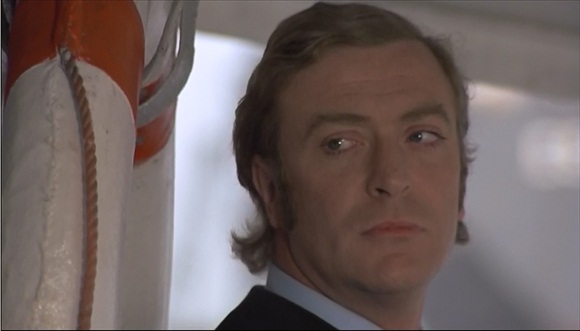
Michael Caine, "Acting in Film" and "Harry Brown"

I've been having a bit of a Michael Caine time lately. The guy's amazing. He's made over 150 movies, and is still going strong.  

First I read his book, Acting in Film: An Actor's Take on Movie Making. This is a riveting, compelling read. He talks about acting, but much of what he says can be applied to screenwriting. 
There was no place allowed for the likes of me in the firmament of actors. Almost anybody has it made today compared to my chances thirty-five years ago.
Flawless (2007)

Let me run through my curriculum vitae before I landed my first role.  See what you think of my chances. I had worked in a laundry. I'd done a stint in a tea warehouse. I'd worked pneumatic drills on the road. I was the night porter in a hotel. I washed dishes in all the best restaurants. I remember making jewel boxes at one time. And I was a soldier.
Get Carter (1971)

It's very difficult for people to comprehend that when I say I was broke at the age of twenty-nine, that I literally didn't have the price of a bowl of spaghetti down at the local diner. They think being broke is being down to your last couple of grand in the bank. My bank was in my pocket, and my account was full of lint.
The Quiet American (2002)
Chances are, you've had some formal higher education. Well, to me and my parents, going to grammar school was higher education. I had no classes to go to, or instructional videos to watch. But I was a tremendous reader of books. And from the pages of those books I discovered what other people's lives were like. They weren't like mine. And I became determined to change my life. I wasn't exploring the possibility, I was determined.
The Actors (2003)


If you really want to become an actor, but only providing that acting doesn't interfere with your golf game, your political ambitions, and your sex life, you don't really want to become an actor. Not only is acting more than a part-time job, it's more than a full-time job. It's a full-time obsession. Anything less and you'll fall short of the mark.
It's a great book, full of the wisdom of the years. You won't be disappointed. 

Harry Brown (2009)
Next I watched him in Harry Brown (2009). It's a simple story, told in an uncomplicated linear fashion, but with immense power. Great script, great acting, great direction. And one of the few films which distinguished itself in my experience by the way it employs both sound and silence. There's much a screenwriter could take from the film. Recommended viewing. 

Harry Brown reminded me of one of Michael Caine's early films, Get Carter (1971). In the first he's the lone avenger of a murdered best friend, in the second he's the lone avenger of a murdered brother.

Get Carter (1971)
One of the interesting scenes in Get Carter takes place in a pub early in the movie. Caine arrives and orders a beer "in a thin glass." Further along the bar we're shown a man taking a drink, and, if you're paying attention, you'll see a hand with six fingers (okay, five fingers, and a thumb). Go on, count them. This isn't CGI or film trickery, it's real. A little joke Michael Caine enjoyed, particularly as almost no one watching the movie ever notices.

The Princess Bride (1987)

The "six-fingered man" made a notable reappearance in The Princess Bride (1987), some sixteen years later.

Michael Caine has made at least six movies since Harry Brown, so I still have some catching up to do. 
  

Wednesday, 19 October 2011

"Talking to Men"

Does that sound hard to you? No? But then again, maybe it is for some women. 

Personally, I always thought it was the other way round, that guys froze, squirmed in embarrassment, or procrastinated (like our friend in 4 Stops), while women had a natural-born capacity to chatter away effortlessly, though sometimes pointlessly.     (Oh, that's my wife. Sorry.)

Anyway, here's Episode 2 of The Louise Log, by the delightful Anne Flournoy. This series of webisodes details the confessions of a New York City wife and mother hell-bent on getting it right in spite of her high-maintenance husband, her addiction to caffeine and her over-active inner voice. Especially her over-active inner voice.


blip.tv    Facebook    YouTube    Website

Tuesday, 18 October 2011

Symbolism, oranges, and "The Godfather"

Oranges are golden in colour and sometimes represent gold, wealth, and by extension, greed.

The Godfather, part 1, employs oranges as a symbol of greed and impending judgment. Consider these shots. 

At the start, at the wedding, Tessio the caporegime is seen holding and contemplating an orange.

If it's not too fanciful, Tessio is already contemplating his rise in the family. Before this story is over, he will betray Michael Corleone, and try to lead him into a trap where he will be killed. Instead, it will be Tessio who dies.

Jack Woltz, the nasty studio head, boasts of being a pedophile and threatens to destroy Johnny Fontane's career, while sitting in front of a pile of oranges. In the next scene, he wakes to find his favourite horses' head in his bed. 


Immediately before he is shot, Vito Corleone buys some oranges

The orange card in the b.g., between the greengrocer and the Don, advertises a Jake LaMotta fight at Madison Square Garden. LaMotta's life story was told in the film Raging Bull, which starred Robert De Niro, who also played Vito Corleone in The Godfather, Part II. LaMotta admitted to a US Senate sub-committee in 1960 that he had thrown a fight on the orders of the Mafia, in exchange for $20,000 and a crack at the world title.

The real-lfe LaMotta appears as a barman in the 1961 movie The Hustler. Paul Newman starred in that movie. By a curious twist, Newman – one of the greatest movie actors ever – won his only Academy Award for the follow-up film, The Color of Money, directed by Martin Scorsese in 1986. But that's a digression.

When Vito Corleone is shot, oranges are shown scattered over the roadside behind the gunmen.


At the meeting of the heads of the Mafia families, Barzini is shown with a bowl of fruit in front of him, including a prominent orange. It is at this meeting that Vito first realises that Barzini was the guy behind all the trouble from the start. Barzini is killed at the end of the movie. 


The final orange on view is one Vito Corleone uses to make some fake scary teeth for himself. At the end of his life, the Godfather is an old man who frightens a child. 

Yeah, I know it was a playful moment, but under that playfulness lies the truth about his character. This is the first time someone in the movie places part of an orange in his mouth. Moments later Vito Corleone dies of a heart attack. 
 

Monday, 17 October 2011

Courage, and the making of a good first impression

Simplicity. The heart of a good short film. Here's one written by Jason McKinnon and directed by Eric Gamache of 17 West Productions.  

4 Stops: A young man riding a subway has less than four minutes to speak to a beautiful stranger, without being creepy, sprayed with Mace, or attracting the ire of the Transit police.